Repiping in North Highlands, CA
When pipes are failing in more than one place, replacing them all is cheaper than fixing leaks one at a time.
- Line answered 24/7
- Nights, weekends, holidays
- Call only, no forms
When patching stops making sense
A single leak in an otherwise healthy line is a repair. Several leaks within a short time on the same pipes is a sign that the material is wearing out everywhere, not just where it failed. At that point, each repair leaves the next weak spot to fail, and the cost of visits and damage adds up.
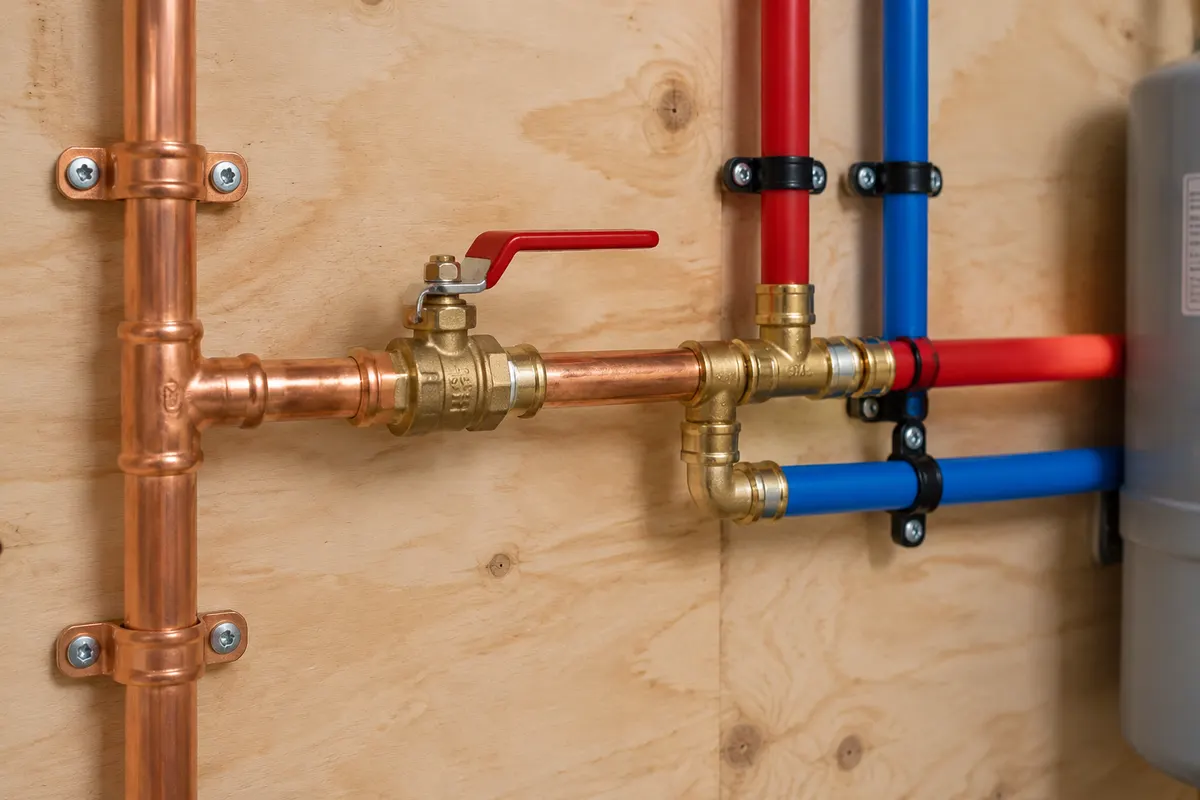
Repiping replaces the water supply lines with new pipe throughout the house or in the affected section. It does not touch the drain and sewer lines, which are a separate system.
Signs the supply pipes are wearing out
- Repeated pinhole leaks in copper, often with green or white crust
- Brown or orange water when the tap is first opened
- Low pressure that has gradually worsened in every fixture
- Visible corrosion or flaking on exposed pipe in the garage or crawlspace
- Water stains on walls or ceilings that appear in new spots
- Known problem pipe, such as galvanized steel or polybutylene, in an older home
Pipe materials compared
The material you choose affects cost, install time and how the pipe behaves over the years.
| Material | Strengths | Trade-offs |
|---|---|---|
| PEX | Flexible, fewer fittings, quick to install, resists corrosion | Not for outdoor exposure to sunlight, and must be installed to code |
| Copper | Long track record, tolerates heat and can be sweated or pressed | Costs more, and some water can wear it from the inside over time |
| CPVC | Rigid plastic, resists corrosion | Can become brittle with age and some fittings crack |
| Galvanized steel | Found in older homes | Corrodes inside, narrowing the pipe and reducing pressure, so it is normally replaced |
How a repipe is done
The plumber plans a new layout and shuts off the water. Small access openings are cut in drywall along the route, new pipe is run to each fixture and the old lines are removed or capped. The fixtures are then reconnected and the system is pressure tested before any wall is closed.
Drywall patching is part of most repipes, and you should ask whether it is included or handled by someone else. A house is usually without water for part of a day, and the plumber can tell you what to expect for your layout.
Whole house or one section
Not every repipe covers the whole house. If the trouble is confined to one bathroom or one branch, replacing that section can be enough. A plumber can use the leak history, the pipe material and a pressure test to say which. A leak detection visit can help sort out whether the pipes are failing or one line is at fault.
What drives the price of a repipe
Repiping is priced by the house. These are the details that decide the total.
- The size of the house and the number of bathrooms, kitchens and fixtures
- The pipe material chosen
- Whether walls are plaster or drywall, and whether floors are finished
- Crawlspace or attic access versus slab construction
- Drywall repair and painting, and whether they are in the quote
- Permit and inspection fees
Renters, owners and older homes
Homes built in different decades used different pipe materials, and polybutylene pipe sold from the 1970s into the 1990s is known to fail, so the right answer depends on what is in your walls. If you rent and the pipes are leaking, the decision to repipe belongs to the owner. Send the landlord a written note with photos and the dates of past leaks, since a repeat leak history helps a decision.
For owners, a repipe done before a wall is ruined by a leak costs less than one done after.
Questions about repiping
Many homes take several days from start to finish, including pressure testing. The house is often without water for part of each day, and the plumber can explain the schedule.
Yes, some access openings are needed, though modern flexible pipe lets a plumber use fewer and smaller ones. Ask whether patching is included.
Yes, PEX is approved for residential water piping in California under the plumbing code, and it is widely used for repipes.
Usually yes, with an inspection before walls are closed. The plumber should say who pulls it.
Yes, you can call overnight about a burst or leaking line. The leak is repaired first, and a repipe is a separate decision made once the water is off and the damage is handled.
Most people do, with limits on water use during the day. The plumber can tell you what is practical for your layout.
Pipes leaking again and again?
Call and tell us how many leaks you have had and what the pipe is made of. We will say whether repiping makes sense.
(916) 555-0100