Emergency Water Heater Repair in North Highlands, CA
Cold showers or water on the floor around the tank both call for a fast diagnosis of what failed and what it will take to fix.
- Line answered 24/7
- Nights, weekends, holidays
- Call only, no forms
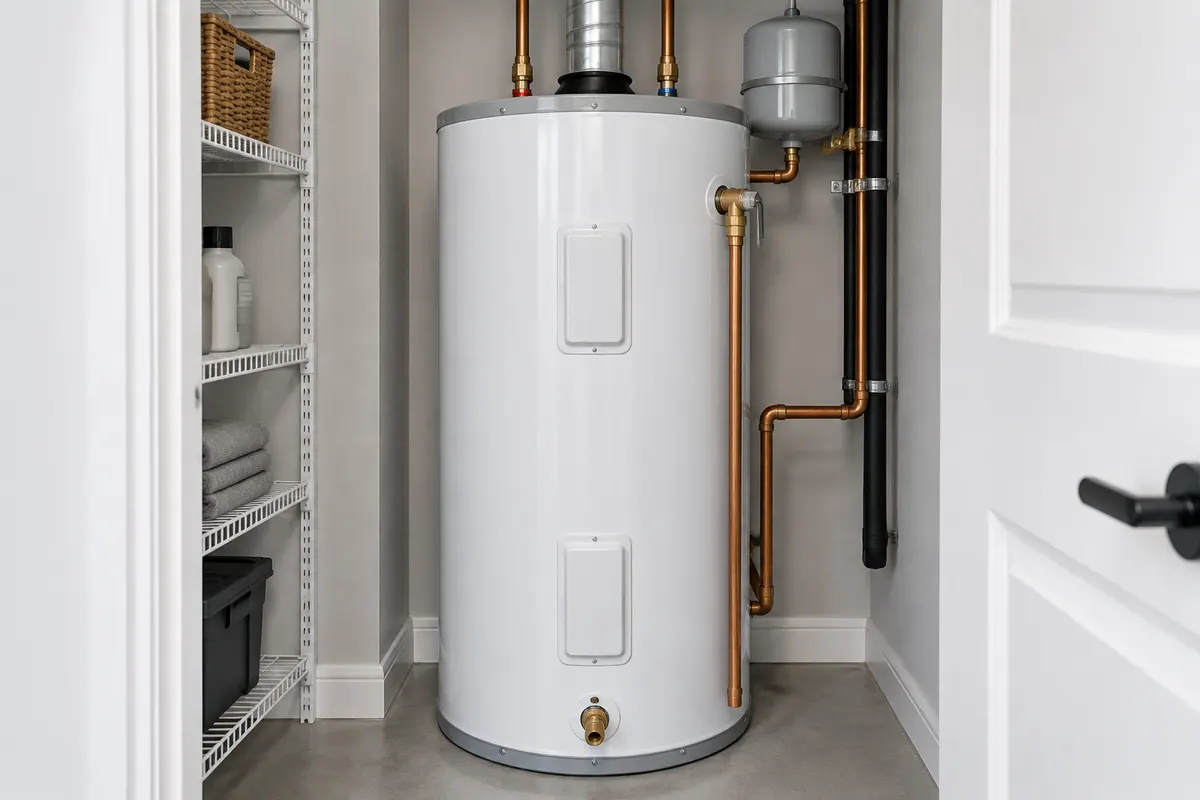
No hot water is a repair problem before it is a replacement problem
Water heater repair fixes the specific part that has failed so the tank can keep working. When the water goes cold, the cause is often a small, replaceable component such as a thermocouple, a heating element or a thermostat, not a dead tank.
We take emergency water heater calls 24/7, because a heater that fails on a winter night or a leaking tank on a weekend cannot wait. The first job is a diagnosis, so you know whether a repair makes sense.
No hot water: common causes by heater type
Gas and electric heaters fail in different ways, which is why the first question is always which type you have.
| Symptom | Gas water heater | Electric water heater |
|---|---|---|
| No hot water at all | Pilot out, bad thermocouple or a failed gas control valve | Tripped breaker, tripped high-limit reset or a failed upper element |
| Water is lukewarm | Broken dip tube, dirty burner or a weak pilot flame | Failed lower element or a bad thermostat |
| Hot water runs out fast | Sediment filling the bottom of the tank | Lower element failed, so only the top of the tank heats |
| Popping or rumbling noises | Sediment hardening on the tank bottom | Sediment covering the elements |
If the tank is leaking, do these first
- Turn off the cold water supply valve on the pipe above the heater
- Switch off the heater, at the breaker for an electric unit or the gas control for a gas unit
- On a gas heater, sniff for gas, and if you catch it, walk everyone outside and phone the gas company or 911 first
- Do not touch a hot tank or wet electrical parts
- Move belongings out of the water's path and photograph the damage
- Note where the water is coming from, since a dripping relief valve and a leaking tank are very different problems
A leaking tank usually means replacement
Water coming from the tank body itself, as opposed to a fitting or valve, means the steel liner has corroded through. A tank cannot be patched. If that is what the diagnosis shows, the honest answer is water heater replacement, and it is better to know that in the first visit than after paying for repairs that cannot hold.
Repair or replace: a quick decision guide
Age, condition and the type of failure decide which way to go.
| Situation | Repair usually makes sense | Replacement usually makes sense |
|---|---|---|
| Age of the tank | Under about eight years | Ten to twelve years or older |
| Type of failure | A part such as a thermocouple, element, thermostat or relief valve | A leak from the tank body |
| Repair history | First problem in years | Repeated repairs in a short time |
| Cost of the repair | A small share of a new unit | Close to the cost of a new unit |
California rules that apply to your water heater
State law (California Health and Safety Code section 19211) requires water heaters to be braced, anchored or strapped against earthquake movement, and a heater that is loose is a hazard even when it works. A repair visit is a good moment to have the straps checked.
The temperature and pressure relief valve is another safety part. The California Plumbing Code, which is based on the Uniform Plumbing Code, calls for a discharge pipe on it, and the valve should never be capped or plugged. A valve that drips constantly may point to excess pressure or a failing valve, so mention it when you call.
Extending the life of a tank you already have
Flushing the tank removes sediment that insulates the water from the burner or elements and forces the heater to work harder. The anode rod inside the tank sacrifices itself to protect the steel and should be checked as the heater ages.
A heater that is well past a decade old may run fine today and fail with no warning. If yours is in that range, ask about the age and condition when the technician is there, and read about tankless water heater service if you want to compare options before you decide.
What affects the cost of a water heater repair
Repairs are priced by the failed part and the labor to fit it, so the diagnosis comes first.
- Which part failed, a small part such as a thermocouple or a larger one such as a gas control valve
- Gas or electric, and the size of the tank
- How accessible the heater is, in a closet, garage or attic
- Whether the unit is old enough that parts are hard to find
- Whether the call is after hours
Questions about water heater repair
On a gas unit, look for an out pilot. On an electric unit, check the breaker. Beyond that, the cause is usually a failed thermocouple, element or thermostat, and a technician can test each part quickly.
Yes. Water heater calls are taken at any hour, holidays included, and a tank leaking overnight is worth a call rather than a wait. Ask for an arrival estimate when you call, since it varies with the job queue and your location.
Water and electricity do not mix, and a gas heater adds its own risk. Shut off the supply and the power or gas, keep people away, and call. If you smell gas, leave the house first.
Sometimes. A part failure on an otherwise sound tank can be worth repairing. If the tank itself is leaking or repairs are piling up, replacement is the better value.
It can mean the pressure in the system is too high or the valve itself is worn. Do not cap it. Have it checked, since the valve is there to prevent a dangerous pressure buildup.
Yes. Tell us the type, the age if you know it and the symptom when you call, and the plumber can arrive prepared for the likely repair.
Cold shower or water around the tank?
Call now with the heater type and the symptom, and we will line up the right repair.
(916) 555-0100