Emergency Water Line Repair in North Highlands, CA
The pipe between the meter and your house carries every drop you use, and a leak in it can go unseen for weeks.
- Line answered 24/7
- Nights, weekends, holidays
- Call only, no forms
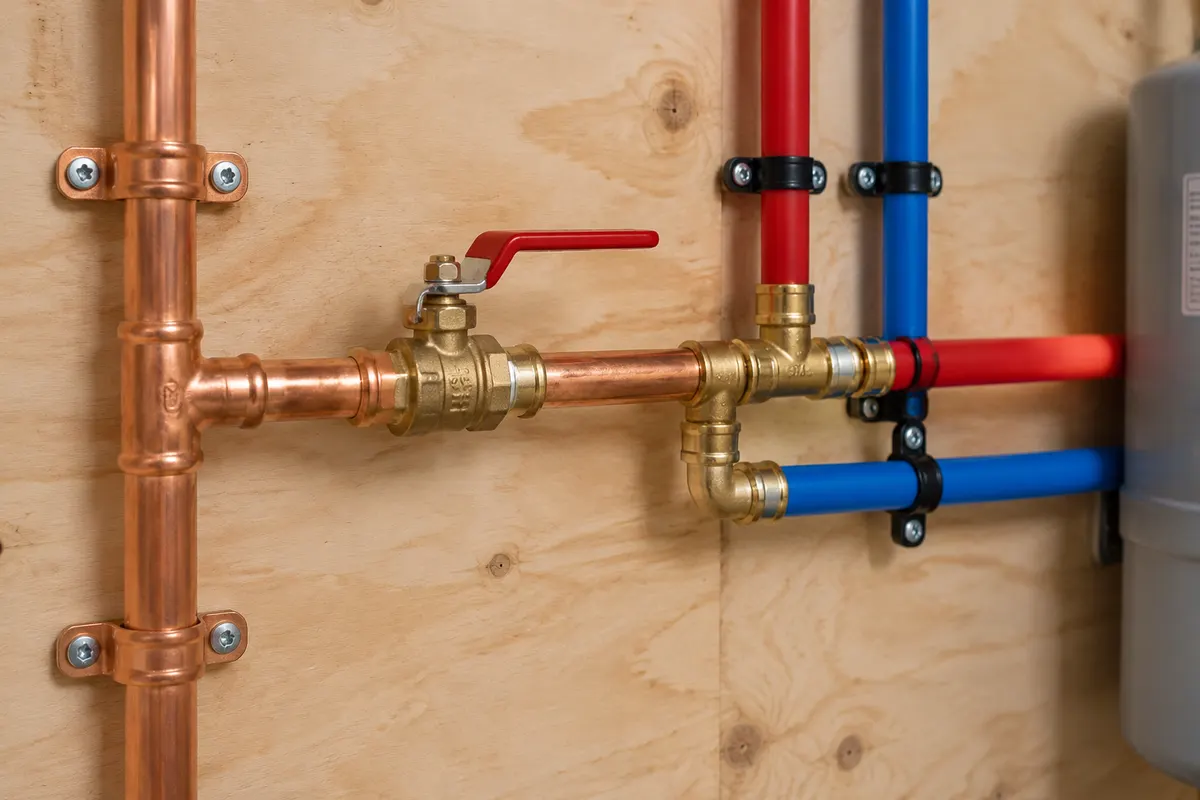
The line most homeowners never think about
Your water service line is the underground pipe that carries water from the utility's meter to your house. Everything on the house side of the meter is normally the homeowner's responsibility, while the utility maintains its own main and meter. If you are unsure where that boundary sits at your address, the water provider can tell you.
Because the line is buried, a leak may show up only as a soft patch in the yard, a puddle by the sidewalk, or water pressure that has slowly gone weak. In a dry summer, a lawn strip that stays green and soggy while the rest browns is a giveaway.
Signs the line is leaking or failing
- A wet, sunken or unusually green patch between the meter and the house
- Low water pressure in every fixture, not just one
- A bill that jumped with no change in how much water you use
- Dirty or discolored water after the line has been shut off and restored
- The sound of running water when everything in the house is off
- A meter that keeps moving with all fixtures closed
No water, or almost none? Check these first
- Look at whether neighbors are also out, since a street repair would explain it
- Check the main valve at the house and make sure it is fully open
- Look at the meter box for water, and for a dial that is spinning
- Call the water provider if the bill is paid but the service is off
- Note whether pressure dropped slowly over weeks or vanished at once
A wet spot in the yard or water at the meter box
A soggy patch over the line, or water standing in the meter box, points to a leak on your side or the utility's side. Where the meter sits usually marks the dividing line. Your water provider can tell you who owns which part.
Do not dig to look. Buried gas, power and communication lines run close to water lines, and an unmarked trench is how a small leak becomes a big one.
Repair, replace or bypass
The right approach depends on whether the problem is one bad spot or a pipe that is worn out along its whole length.
| Option | What it involves | Best when | Consider |
|---|---|---|---|
| Spot repair | Dig to the leak, cut out the bad section and join new pipe | One localized failure in otherwise good pipe | The next failure may be nearby if the pipe is old |
| Full replacement, open trench | Dig the full run and lay new pipe | Old galvanized or heavily corroded pipe, or repeated leaks | Landscaping, driveway or sidewalk cuts to restore |
| Trenchless replacement | Pull new pipe through the old path from two small pits | Long runs under lawns, driveways or patios | Not possible on every line, so it is checked first |
| New line in a new route | Run a fresh line around an obstacle | The old path is blocked or unsafe to dig | May need a permit and a longer run |
How a plumber confirms it is the service line
The first step is the meter. Read it with every fixture off, and a moving dial means water is escaping somewhere on the house side. Closing the main valve at the house then splits the problem in two. If the meter keeps moving with the house valve closed, the leak is between the meter and the house, and this is where a service line repair belongs.
If the meter stops when the house valve closes, the leak is inside the house instead, and leak detection is the next step. Confirming which side has the leak avoids digging in the wrong place.
What the line is made of matters
Older homes may have galvanized steel, copper or another material on the line, and each ages in its own way. Steel corrodes from the inside and loses flow. Copper can pit. Plastic lines fail at joints and fittings.
A plumber can identify the material where it enters the house and at the meter. Ask what your water provider keeps on record for its side, and ask the plumber to note the material in the quote.
Call 811 before anyone digs
Before any excavation, California's underground safety law (Government Code section 4216) calls for notice to the regional one-call center by dialing 811, normally at least two working days ahead, so that underground utilities are marked. A plumber will normally handle this, and a homeowner who plans to dig alone should do it first. Gas, electric and communications lines share the same yards, and hitting one turns a plumbing problem into a much bigger one.
What drives the cost of a water line job
A short repair in a soft lawn is a different job than a long run under a driveway. These factors move the estimate the most.
- The length of the line and how deep it is buried
- The pipe material being installed and the condition of what is being replaced
- Open trench or trenchless, and what has to be restored afterward
- Whether the pipe crosses a driveway, sidewalk, patio or root zone
- Permit requirements and inspection
Pressure problems that are not the line
Low pressure is not always a leak. A partly closed valve, a clogged aerator or a failing pressure regulator at the house can each cause it. A pressure regulator on the house side of the meter keeps incoming pressure in a safe range, and one that has failed lets high pressure age every pipe and fixture in the house.
A plumber can check pressure with a gauge at a hose bib, which takes only a few minutes and helps rule the line in or out.
Questions about water line repair
Usually the utility owns the main and the meter, and the homeowner owns the line from the meter to the house. Your water provider can confirm where the boundary is at your address.
You can, but you pay for every gallon that escapes and the leak can undermine soil, walkways or driveways. If water is surfacing, close the main valve at the house and call.
A spot repair is often a partial day. A full replacement or trenchless job can take a day or more depending on length, depth and what has to be restored.
Where possible the plumber uses a small access pit or a trenchless method. A line that runs under a driveway or patio may need a cut, and that is explained before work begins.
Yes. A line that is flooding a yard or has left the house dry is worth a call whatever the hour. Close the house valve, and have the meter reading and the wet spot location ready.
Copper, PEX and HDPE are all used, and the choice depends on soil conditions, local code and budget. The plumber can explain the trade-offs for your lot.
Look at the main valve, the meter box and whether neighbors have water. If the shutoff is at the meter and the utility closed it, call the provider. If the valve is open and nothing flows, the line or a fitting may have failed, and that is a plumbing call.
That stretch is the usual scope of a water line replacement. The plumber confirms where your responsibility starts and ends, then explains the route and the method before anything is dug.
Not always. A slow loss of pressure with a meter that moves can mean a leak. Low pressure at one fixture usually points to that fixture, and low pressure everywhere can come from a partly closed valve, a failing regulator or old pipe.
Close every tap, shut the house main, then watch the meter. If the dial still turns, the leak lies between the meter and the house. If it stops, look at the plumbing inside.
Whether a long trench is needed depends on soil, depth, obstacles and the distance from the street. The plumber explains the method before any digging starts.
Wet yard or no pressure at the tap?
Call now with what you see at the meter and the house. We will help work out whether it is the service line.
(916) 659-9833