Tankless Water Heater Service in North Highlands, CA
Tankless heaters last a long time when they are flushed and vented correctly. Most trouble starts with scale or a blocked inlet screen.
- Line answered 24/7
- Nights, weekends, holidays
- Call only, no forms
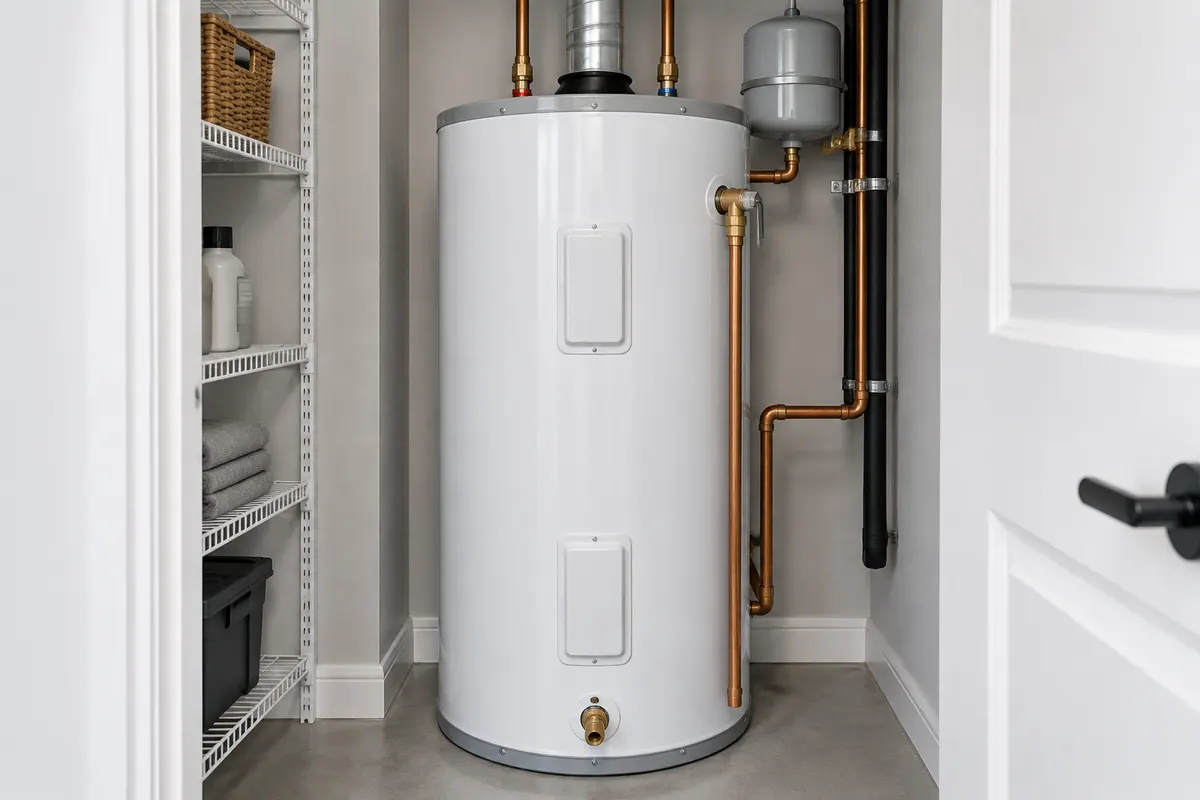
How a tankless heater differs from a tank
A tankless heater has no storage tank. It heats water as it flows, using a gas burner or electric elements that switch on when you open a tap. That means it does not run out, but it does depend on flow. The unit needs enough water moving through it to fire, and enough gas or power to heat that flow.
The Department of Energy says a tankless heater can last more than 20 years with proper maintenance, roughly double a tank. Maintenance is what earns that life.
Symptoms and their usual causes
Many tankless faults show up as a code on the display, but the pattern is what tells the plumber where to look.
| Symptom | Likely cause | Typical response |
|---|---|---|
| Water goes cold in the middle of a shower | Scale on the heat exchanger or a low flow rate | Flush and descale, check the flow |
| Unit will not fire | Clogged inlet filter, low flow or a gas supply problem | Clean the filter and check gas and flow |
| Error code on the display | Ignition, venting, sensor or flow fault | Read the code and test the related part |
| Lukewarm output | Undersized unit, mixed crossover from another valve or scale | Test for crossover, flush, check the sizing |
| Water runs cold at a fixture | A mixing valve or recirculation problem | Test the line and valve |
| Rumbling sounds | Scale in the heat exchanger | Descale |
Flushing is the job that matters most
Minerals in the water settle inside the heat exchanger over time, and the heater has to work harder to heat through the scale. Flushing the unit with a descaling solution and clearing the inlet filter restores flow and heat transfer. Manufacturers generally recommend a periodic flush, and the schedule depends on your water and how much you use.
A plumber uses isolation valves to run the solution through the heater. If your unit has no service valves, adding a set makes future flushing much simpler.
Gas supply and venting
A tankless gas heater draws far more gas at once than a tank. If the gas line is too small, the burner starves and the unit shuts down or gives lukewarm water. Venting is the other common problem, because these units need the right vent material and clearances. A blocked or damaged vent triggers a safety shutdown, and it should be fixed rather than bypassed. See our gas line page for the piping side.
What affects the price of tankless service
A flush is a modest job. A failed control board or heat exchanger is not, and the price reflects the part.
- Whether the job is a flush, a sensor or valve replacement or a major part
- The brand and model, since parts vary in cost and availability
- Whether isolation valves are already in place
- Gas line size, venting condition and condensate drain issues
- Warranty status on the unit or the part
Before you call about a tankless problem
- Note the error code shown on the display and the make and model on the label
- Check that the gas valve is open, or that the breaker for an electric unit is on
- Check whether the problem is at one fixture or all of them
- Note whether hot water works at a low flow, since a low flow can stop a unit from firing
- Photograph the display and the vent if you can see it
- Do not open the gas or combustion parts of the unit yourself
Replacing a tank with a tankless unit
Switching from a tank heater to a tankless one is possible in many homes, but it is more than a swap. The gas line may need upsizing, the venting is different and an electric tankless can need a much larger circuit. That is why these jobs are scoped in person. Our water heater replacement page covers the options side by side.
Questions about tankless heater service
Manufacturers publish a schedule, and it depends on your water and how much you use. Many are flushed about once a year.
Scale on the heat exchanger, a low flow rate, an undersized unit or a crossover between hot and cold lines can each cause it. Testing narrows it down.
Each brand uses its own codes for ignition, venting, flow and sensor faults. Note the code and the model number and tell the plumber.
Ask when you call and give the make and model. Availability of parts varies by brand.
Someone picks up overnight. If there is a gas smell, though, leave the house and call 911 or the gas utility before anything else.
Most gas units need electricity for the controls and fan, so they stop in an outage. Ask about backup options if that is a concern.
Tankless heater cold or throwing a code?
Call with the make, the model and the error code, and we will line up the right service.
(916) 555-0100